How To Build A Beginner Running Plan
A practical step-by-step guide to how to build a beginner running plan, including preparation, instructions, common issues, tips, and next steps.
How To Build A Beginner Running Plan
This guide explains how to approach how to build a beginner running plan, including the preparation, practical steps, common mistakes, and final checks that help you finish with confidence.
Before You Start
Step-by-Step Instructions
Quick Reference
Common Problems When You Build A Beginner Running Plan
Problem: Starting Too Fast or Doing Too Much
Many beginners get excited and try to run too fast or for too long right from the start. This often leads to quick burnout, muscle soreness that's beyond normal, or even injury (like shin splints or knee pain). It can make running feel like a chore rather than an enjoyable activity.
Fix: Remind yourself of the "talk test" and the 10% rule. Always aim for a pace where you can comfortably hold a conversation. If you find yourself gasping for air, slow down. Prioritise completing the *time* or *intervals* planned, not speed or distance. If you're feeling overly sore, take an extra rest day or reduce your next session's duration/intensity.
Problem: Lack of Consistency or Motivation
Life happens, and it's easy to miss a run, which can then lead to missing more. Or, some runs just feel harder than others, making you question your progress or motivation. Beginners can easily get disheartened if they don't see immediate results or if they hit a wall.
Fix: Schedule your runs like important appointments and prepare your gear the night before. Find an accountability partner or join a beginner-friendly running group. Remember your 'why' – your initial goal. Track your progress to see how far you've come. On low-motivation days, tell yourself you only need to run for 10 minutes; often, once you start, you'll want to continue. Don't dwell on missed runs; just pick up with the next planned session.
Problem: Ignoring Pains and Pushing Through Injury
There's a fine line between normal muscle soreness (DOMS - Delayed Onset Muscle Soreness) and actual pain from injury. Beginners, eager to make progress, sometimes ignore warning signs, thinking they just need to "push through it." This can turn a minor niggle into a chronic problem.
Fix: Learn to distinguish between muscle fatigue and pain. Muscle fatigue is a general tired, aching feeling that usually subsides with rest. Pain is sharper, more localised, and doesn't get better. If you experience sharp pain, joint pain, or pain that worsens with activity, stop immediately. Rest, apply ice if needed, and consider a gentle walk instead of a run. If pain persists for more than a day or two, consult a medical professional. Your long-term running health is more important than one skipped session.
Problem: Poor Nutrition or Hydration
What you eat and drink significantly impacts your energy levels and recovery. Beginners sometimes overlook the importance of fueling their body properly for exercise, leading to low energy during runs or slow recovery afterwards.
Fix: Focus on a balanced diet rich in whole foods, lean proteins, fruits, vegetables, and complex carbohydrates. Drink plenty of water throughout the day, not just around your runs. For runs under an hour, water is usually sufficient. For longer runs (which you'll build up to), consider a small snack 30-60 minutes beforehand (like a banana) to top up energy stores. Listen to your body's hunger and thirst signals.
Advanced Tips for How To Build A Beginner Running Plan
Once you've consistently followed your beginner plan for 8-12 weeks and feel comfortable running for 20-30 minutes without walking, you can start to think about adding a few "advanced" elements to your routine. Remember to introduce these gradually.
- Introduce Varied Terrain: Instead of sticking to pavements, try incorporating some grass, park paths, or even very gentle trails. Running on varied surfaces can strengthen different muscles, improve balance, and make your runs more engaging. Just ensure your footwear is appropriate for the terrain.
- Add Short Bursts of Faster Running (Strides): Once a week, after your main easy run, you can add 4-6 "strides." These are short (100-metre), quick, but controlled bursts of running, where you gradually accelerate to about 80% of your maximum speed, hold it for a few seconds, then gradually decelerate. Walk back to your starting point and repeat. Strides help improve your running form and leg speed without being too taxing.
- Incorporate Strength Training: Running is demanding on your body, and stronger muscles can prevent injuries and improve efficiency. Aim for **1-2 sessions of bodyweight strength training per week** on non-running days. Focus on core exercises, squats, lunges, and calf raises. These simple movements will support your running muscles.
- Focus on Dynamic Warm-ups and Cool-downs: Instead of just a brisk walk, introduce dynamic stretches like leg swings, arm circles, and walking lunges into your warm-up. These active movements prepare your muscles for running more effectively. For cool-downs, incorporate some gentle foam rolling if you have access to one, focusing on quads, hamstrings, and calves.
- Join a Running Club or Community: While not a training method, joining a local running club or connecting with other runners can provide immense support, motivation, and learning opportunities. You'll often find organised sessions, shared routes, and experienced runners who can offer advice, which can significantly enhance your running experience beyond the initial beginner phase.
- Consider Your Running Form: As you get more comfortable, you might start thinking about your running form. Focus on a tall posture, relaxed shoulders, a slight lean from the ankles (not the waist), and a light, quick cadence (footfalls). Don't drastically change your form, but small adjustments can make a difference. Many running apps offer basic form tips.
How To Build A Beginner Running Plan FAQ
How long should my beginner running plan be?
Most effective beginner running plans, like Couch to 5k, are designed to take **9-12 weeks** to get you from walking to running a 5k distance or running continuously for 30 minutes. The exact duration depends on your starting fitness and how consistently you follow the plan.
What if I can't finish a running interval?
It's completely normal to find some intervals challenging. If you can't finish an interval, don't worry. **Slow down your running pace first.** If it's still too much, shorten your running interval slightly (e.g., run for 45 seconds instead of 60) or extend your walking interval. You can also repeat the previous week's workout until you feel strong enough to progress. Consistency and finishing strong are more important than pushing too hard.
Do I need special running gear?
The most crucial piece of gear is a **comfortable pair of running shoes**. You don't need the most expensive shoes, but ensure they fit well and provide adequate support for your feet. Beyond that, comfortable, breathable clothing is important. A stopwatch or a basic running app on your phone is also very helpful for timing your intervals. Everything else is optional for beginners.
How do I stay motivated when I'm just starting?
Set small, achievable goals, like completing three runs this week. Find a running buddy or join a local running group for accountability. Track your progress to see how far you've come. Explore new routes to keep things interesting. Reward yourself (non-food rewards!) for hitting milestones. Most importantly, focus on how good you feel after a run, not just during it.
Is it okay to walk during a run?
Absolutely! For beginners, **walk breaks are not just okay, they are highly recommended and an integral part of your training plan.** The run/walk method is a proven way to build endurance safely and effectively, allowing your body to adapt without excessive strain. Even experienced runners use walk breaks in ultra-marathons or during recovery.
What should I eat before and after a run?
For shorter runs (under 60 minutes), you generally don't need much. If you're hungry, a small, easily digestible snack like a banana or a slice of toast 30-60 minutes before can help. After a run, focus on a balanced meal with carbohydrates for energy replenishment and protein for muscle repair, ideally within an hour or two. Always stay hydrated with water throughout the day.
Final Checklist for How To Build A Beginner Running Plan
- [ ] Health check: Consulted a GP if you have any health concerns or haven't exercised recently.
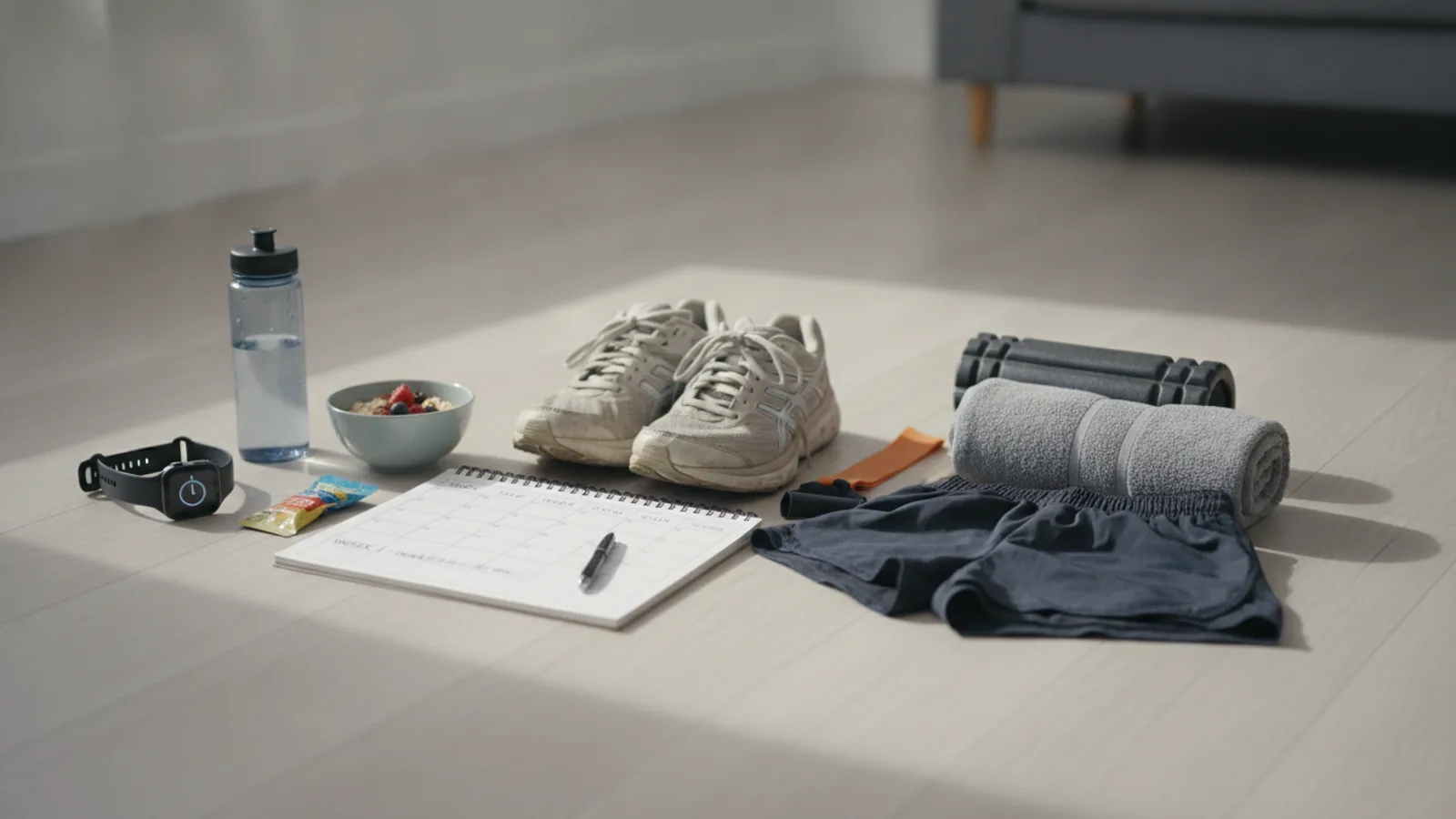
- [ ] Gear ready: Have comfortable running shoes, appropriate clothing, and a way to time your intervals.
- [ ] Realistic goal set: Defined a specific, achievable running goal (e.g., run 5k, run for 30 min).
- [ ] Run/walk structure chosen: Selected a gradual run/walk programme.
- [ ] Schedule planned: Allocated 3-4 consistent running days with rest days in between.
- [ ] Effort level understood: Committed to a "conversational pace" for all runs.
- [ ] Session structure clear: Planned for warm-up, main workout, and cool-down for each session.
- [ ] Gradual progression understood: Ready to increase running time/distance slowly (e.g., 10% rule).
- [ ] Rest prioritised: Prepared to listen to your body and take rest days when needed.
- [ ] Tracking method ready: Decided on a way to track your progress (diary or app).
- [ ] Positive mindset: Ready to enjoy the process and be patient with yourself.